
So you’ve found it. That little house with a view of the ocean, the one you’ve been dreaming about for years. The photos are gorgeous, the price feels right, and you’re already picturing yourself drinking coffee on the terrace while the waves crash somewhere below.
Why Buying by the Sea Is a Different Game Entirely
But hold on. Buying a seaside property is not like buying a regular house. There are specific risks, specific costs, and frankly, specific traps that a lot of buyers walk right into – because they fell in love before they did their homework. I’ve seen it happen. Sites like https://www.immobilier-bord-de-mer.fr cover this niche in a lot of detail, and if you’re seriously looking at coastal real estate, it’s worth a read before you get too emotionally attached to any one property.
Here are 9 things you absolutely need to check before you sign anything.
1. The Distance from the Water – And What That Actually Means
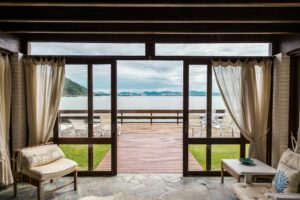
“Seafront” can mean a lot of different things. Is the house literally on the beach, or is it 500 meters away with a partial view between two buildings ? That matters for the price, obviously, but also for the risk. Properties right on the waterfront are exposed to coastal erosion, storm surges, and saltwater damage in ways that houses even a few hundred meters inland simply aren’t.
Ask exactly how many meters the property sits from the high-water mark. It sounds like a boring technical question. It isn’t.
2. Check the Flood Zone Classification
This one is non-negotiable. In many coastal areas, there are official risk prevention plans – Plans de Prévention des Risques in France, flood zone maps in the US, similar systems in the UK – that classify zones based on their exposure to flooding, submersion, or rising sea levels.
If the house is in a high-risk zone, you might face restrictions on renovations, obligations to raise the structure, or even future buy-back programs by local authorities. You can usually check this through the local planning office or municipality website. Don’t skip it. It takes 20 minutes and could save you from a decision you’d deeply regret.
3. Insurance : Can You Actually Get It – And at What Cost ?
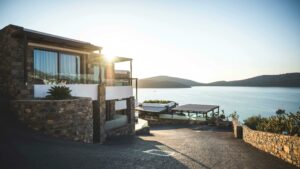
A lot of buyers are shocked by this one. Coastal properties, especially those close to the water, can be very expensive to insure – or in some cases, insurance companies will flat-out refuse to cover certain risks. Natural disaster coverage, storm coverage, and flooding are the ones to look at specifically.
Get real quotes before you sign. Not estimates – actual quotes from insurers who’ve seen the address. The difference between an inland home’s insurance and a seaside property’s premium can easily be hundreds of euros or dollars per year. Factor that into your budget.
4. Salt and Humidity Damage : The Hidden Enemy
Salt air is brutal. I don’t think most people realize just how much damage it causes over time – to the structure, the facade, the windows, the metalwork, the roof. A property that’s been well maintained near the sea is very different from one that’s been neglected for five years, even if they look similar in photos.
During your visit, look closely at the window frames (are they rusting, swelling, cracking ?), the exterior walls (paint peeling, efflorescence, crumbling joints ?), and the roof (missing or corroded tiles ?). If you’re not confident in your eye, hire a building surveyor who has specifically worked on coastal properties. It’s maybe 500 to 1,000 euros well spent.
5. The Age and State of the Seawall or Natural Protection

If the property is protected by a seawall, a dike, or a natural dune system, you need to know the condition of that protection. Who owns it ? Who maintains it ? Is there a planned renovation, and if so, is there a special levy being charged to property owners in the area ?
This is the kind of thing that can blindside you completely if you don’t ask. In some cases, buyers have discovered after purchase that they owed several thousand euros in shared infrastructure costs they knew nothing about.
6. Accessibility in Winter
Coastal towns that feel magical in July can feel isolated, windswept, and frankly a bit depressing in January. That’s not a reason not to buy – but it’s a reason to visit in winter before you commit. Are the roads accessible ? Are local shops open year-round ? Is the house connected to mains utilities rather than relying on a seasonal supply ?
If this is going to be your main residence, these questions matter enormously. If it’s a holiday home, maybe less so – but still worth thinking through.
7. Planning Rules and Construction Restrictions
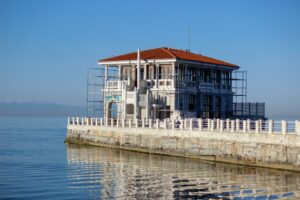
Coastal zones are often heavily regulated when it comes to building and renovation. In France, the Loi Littoral restricts construction within certain distances of the coastline. Other countries have equivalent rules. This can affect your ability to extend the house, add a pool, build a garage, or even make significant structural changes.
Find out what’s permitted before you fall in love with a project that will never get planning approval. Speak to the local planning authority, not just the estate agent.
8. Water and Wastewater Systems
Some coastal properties – especially older ones in smaller villages or more rural coastal areas – are not connected to the main sewage system. They rely on a fosse septique (septic tank) or a similar individual system. These need regular maintenance, can be expensive to replace, and may need to comply with updated environmental regulations.
Ask for documentation on the wastewater system. If it’s not connected to mains drainage, request a recent compliance report. If the system is out of date, you may be legally required to bring it up to standard within two years of purchase in France – that’s a cost you need to know about upfront.
9. The Long-Term Picture : Sea Level Rise

OK, this is the uncomfortable one. But it’s real. Coastal properties in low-lying areas face genuine long-term risk from rising sea levels and increased storm intensity. Some areas that are perfectly safe today may look different in 30 or 40 years.
I’m not saying don’t buy. I’m saying think about your time horizon. If you’re buying for five to ten years, this is probably not your primary concern. If you’re thinking of it as a long-term family asset to pass down, it’s worth looking at climate risk projections for the specific area – some local authorities publish these, and there are independent research tools available online.
In Short
Buying by the sea is wonderful. The lifestyle, the views, the sound of the ocean – it’s genuinely something that’s hard to put a price on. But it comes with a specific set of risks that inland properties just don’t have. The 9 points above aren’t meant to scare you off. They’re meant to make sure that when you sign, you’re doing it with your eyes wide open – and that the dream doesn’t turn into an expensive surprise two years down the line.
Take your time. Ask the awkward questions. Visit more than once. And get proper professional advice before you commit.